
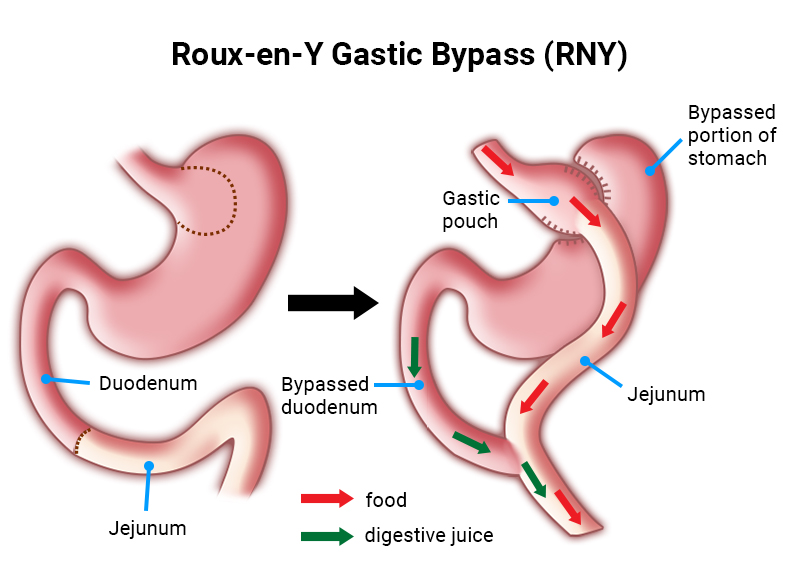
How gastric bypass works
A small stomach pouch is created and connected to the small intestine, bypassing the remaining stomach and the first part of the intestine. This limits portion size, changes gut-hormone signals and can improve reflux and diabetes in suitable patients.
- Problem reflux or large hiatus hernia.
- Type 2 diabetes or metabolic syndrome needing stronger effect.
- Inadequate result or reflux after previous sleeve (revision assessed individually).
Final suitability is confirmed after a personalised consultation.
- Clinically significant weight loss over 12–24 months with program support.
- Higher chance of diabetes improvement/remission compared with sleeve.
- Reflux symptoms often improve.
Potential risks include bleeding, infection, leak, DVT/PE, internal hernia, strictures and marginal ulcers (risk increased by smoking/NSAIDs). Lifelong vitamin/mineral monitoring is required. We focus on risk reduction via careful work-up and experienced laparoscopic technique.
See: Bypass Risks — Gold Coast .
Recovery & aftercare
- Stay: usually 2–3 nights.
- Return to desk work: ~2 weeks (varies).
- Diet: Fluids → Purees → Soft → Regular over ~4–6 weeks.
Details: Recovery after Bypass · Diet Stages .
Fees vary by fund cover, hospital/anaesthetic fees and aftercare inclusions. We’ll provide a personalised quote.
Learn more: Bypass Cost — Gold Coast · Overall costs & finance .
Book a consultation · Nearby: Brisbane · Hervey Bay
Information is general and not a substitute for medical advice. Outcomes and recovery vary.
Typically 90–120 minutes, depending on anatomy and clinical factors.
It often improves reflux compared with sleeve; your suitability is assessed individually.
Regular NSAIDs increase ulcer risk after bypass—your team will advise alternatives.