
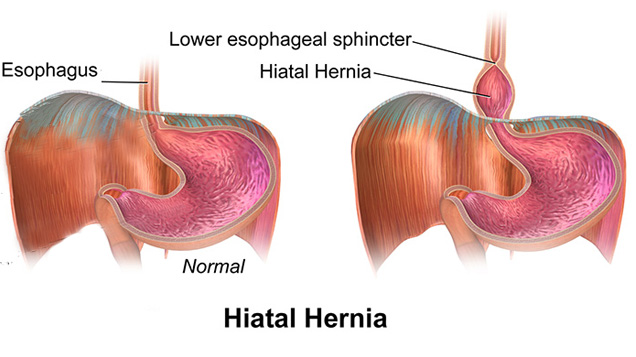
Gastroesophageal reflux disease (GERD) is common condition which occurs when stomach acid refluxes up into the esophagus (food pipe).
The main symptom of stomach acid reflux is heartburn. This is characterised by a burning-type pain and pressure behind the breastbone, in the centre of the chest. Other symptoms include nausea, regurgitation of food (when a stomach content rise back up the esophagus and into the mouth), bitter or sour taste in the mouth, sore throat, trouble swallowing, chest pain, dry cough and abnormal voice changes.
There are two main problems that predispose patients to GERD including:
Surgical therapy is targeted towards correction of the above-mentioned underlying problems. The surgeon is able to correct a hiatal hernia by replacing the stomach into the correct position within the abdomen. Furthermore, to strengthen the lower esophageal sphincter and prevent acid reflux from occurring, the surgeon can perform a procedure called fundoplication by wrapping the top part of the stomach (the fundus) around the lower part of the esophagus.
If indicated, both procedures can be done at the same time. Dr Mastakov will use laparoscopic (keyhole) surgery, using very small incisions. Patients commonly spend 1 to 2 days in the hospital after the surgery and 2–4 weeks at home recovering.
The ideal candidate for anti-reflux surgery should respond well to medical therapy for heartburn. Patients with a poor response to medical therapy and patients with are atypical symptoms of GERD (asthma or asthma-like symptoms, persistent cough, or laryngitis) typically more likely to have a poor surgical outcome. The main reason for this is that these patients may have problems besides GERD that are unresponsive to treatment.
Further reading: Better Health Channel · Source 2 · Source 3 Zacheri J, et al. Endoscopic anterior fundoplication with the Medigus Ultrasonic Surgical Endostapler (MUSE™) for gastroesophageal reflux disease: Six-month results from a multi-center prospective trial. Surgical Endoscopy. 2015;29:220.